Metal Roofing Near You With Standing Seam and Exposed Fastener Systems, Galvalume or Aluminum Panels and Fasteners Matched to Salt Air
Collins Roofing and Repair Matches the Metal,the Finish and the Fasteners to How Close You Live to Salt Water
A metal roof can last 40 to 60 years.
That's two shingle roofs, maybe more. Collins Roofing and Repair installs standing seam and exposed fastener metal, and we tell you straight which system and which metal fit your house and your distance from the ocean.
5.0 stars across 71 Google reviews. Licensed and insured. Free roof inspections and written estimates. Every metal roof carries a written workmanship warranty, the panel maker's material warranty and our 100% satisfaction guarantee.
Thank you for contacting us. We will get back to you as soon as possible.
Oops, there was an error sending your message. Please try again later.
How to Choose a Metal Roofing Company Near You That Knows Salt Air
Choosing a metal roofer comes down to one thing: does the roofer match the metal to your exposure, or sell the panel on the truck? Collins Roofing and Repair asks how close you are to salt water before it recommends anything.
"Josh is very knowledgeable and thorough with his findings!"
Four Questions to Ask Before You Hire a Metal Roofer
Ask every metal roofer these four questions, and get the answers on your estimate.
01
Which Metal Do You Recommend for How Close I Live to Salt Water?
Salt spray eats the wrong metal from the cut edges in. Galvalume panel warranties commonly exclude homes within set distances of the coast. A roofer who never asks about the ocean or the marsh isn't thinking about your warranty.
How Collins Roofing and Repair Answers
At your free inspection, Collins Roofing and Repair walks you through metal, panel style, finish and fasteners, and why each one fits your exposure. Oceanfront and marsh-front homes usually point to aluminum. Inland homes have more room for Galvalume steel.
02
Is This Standing Seam With Hidden Clips or Screw-Down Panels?
Two quotes can both say metal roof and land thousands apart because one is standing seam and the other is exposed fastener. Make the roofer name the system in writing.
How Collins Roofing and Repair Answers
Your written estimate names the panel system, the metal, the finish and the fasteners. No guessing what you're paying for.
03
What Fasteners and Flashing Metals Will You Use?
The panel isn't the only metal on your roof. Screws, clips, flashing and trim all have to hold up to salt air and work with the panel metal, or they corrode first.
How Collins Roofing and Repair Answers
We match fasteners and flashing to the panel and the exposure, and we keep incompatible metals apart. Near the water, we price stainless or coastal-rated fasteners into the estimate.
04
Who Stands Behind the Roof After the Crew Leaves?
Metal is less forgiving than shingles. A bent seam or a sloppy flashing cut shows up as a leak or a rust streak years later.
How Collins Roofing and Repair Answers
Collins Roofing and Repair backs every metal roof with a written workmanship warranty, and you get the panel maker's material warranty paperwork when the job closes.
"Professional, Dependable, Quality work, and stands behind their work and word."
A metal roof with no system named. You can't compare a screw-down price to a standing seam price.
No question about your distance to salt water. That choice drives the metal, the fasteners and the warranty.
Copper or lead flashing planned next to steel or aluminum panels. Mixed metals can corrode each other.
A screw-down roof sold as maintenance-free. Exposed fasteners need checking for the life of the roof.
Standing Seam vs. Exposed Fastener
Metal Roofing From Collins Roofing and Repair
Standing seam metal uses vertical panels joined by raised seams and held down with hidden clips. Exposed fastener metal screws the panels straight through the face into the deck. Collins Roofing and Repair installs both, and the right pick depends on the building, the budget and how long you plan to stay.
Standing SeamHidden clips, no screw holes in the field
vs
Exposed FastenerScrews through the panel face
Standing seam and exposed fastener metal roofing compared factor by factor, with 2026 South Carolina installed costs per square
Factor
Standing Seam
Exposed Fastener (Screw-Down)
How it attaches
Hidden clips under the seam
Screws through the panel face
Holes in the panel
None in the open field
Hundreds of screw holes sealed by washers
Heat movement
Panels slide on the clips
Panels pull on the screws and can loosen them
Upkeep
Check penetrations and clear debris
Check and replace screws and washers over time
2026 SC installed cost (steel)
About $1,065-$1,330+ per square
About $690-$860+ per square
Best for
Homes, beach exposure, long-term owners
Porches, sheds, barns, shops, budget jobs
Why Standing Seam Is the Coastal Favorite
There are no screw holes in the field of a standing seam roof. The clips let each panel grow and shrink through a hot afternoon and a cool night without tearing at the fasteners. Fewer holes means fewer places for wind-driven rain to get in.
Snap-Lock vs. Mechanical Seam
Snap-lock panels click together along the seam and go on faster. Mechanical seam panels are crimped shut with a seaming tool for a tighter lock, the stronger choice for hurricane exposure and lower roof pitches.
Rib Height and Panel Width
Taller ribs add stiffness and move heavy rain off faster. Lower ribs and narrower panels give a cleaner look on a house. Your service rep will show you profiles side by side.
Where Exposed Fastener Panels Make Sense
Screw-down panels cost noticeably less and go on fast. Collins Roofing and Repair recommends them where budget matters more than a 50-year horizon:
Detached garages, sheds and workshops where a lower price per square foot wins.
Barns and farm buildings on rural property inland.
Covered porches and carports that need a quick, tough cover.
Rentals and short-hold properties you won't own in 30 years.
Keeping a Screw-Down Roof Tight
The rubber washers under each screw dry out in the sun over the years, and loose screws let water in. Plan on having the fasteners checked every few years and after big storms. See metal roof repair on our roof repair
page.
"Josh was extremely professional and knows his trade."
Galvalume Steel vs. Aluminum
: Matching the Metal to Salt Air With Collins Roofing and Repair
The best metal for your roof depends on your distance from salt water. Galvalume steel is the workhorse for most inland homes. Aluminum is the safer pick for homes near the ocean, the inlet or the marsh. Collins Roofing and Repair walks you through both prices.
Metal options for a standing seam roof, how each handles salt air, 2026 South Carolina installed cost and best use
Metal
Salt Air Fit
2026 SC Installed Cost (Standing Seam)
Best Use
Galvalume steel, basic finish
Good inland, warranty limits near the coast
About $10.65 per sq ft
Inland homes, shops and outbuildings
Galvalume steel, PVDF finish
Better color and corrosion hold inland
About $13.30 per sq ft
Most inland homes and commercial roofs
Aluminum
Excellent, does not rust
About $14.25 per sq ft
Oceanfront, inlet, marsh and Intracoastal homes
How Close Is Too Close for Galvalume?
Galvalume is steel coated with an aluminum and zinc alloy. It holds up for decades inland, but salt in the air attacks it. One major panel maker's Galvalume warranty excludes salt water marine settings and sets these distances:
Distances from each coastline type within which one panel maker's Galvalume warranty does not apply
Coastline Type
Galvalume Warranty Excluded Within
Coastline with breaking surf
1,500 feet
Coastline with a large bay
800 feet
Coastline with marsh
400 feet
On this coast, that covers oceanfront blocks in Myrtle Beach, Surfside Beach, Garden City and North Myrtle Beach, plus homes along the marsh in Murrells Inlet and Pawleys Island. Collins Roofing and Repair checks the panel maker's rules for your exact address before recommending a metal.
Aluminum for Oceanfront and Marsh-Front Homes
Aluminum doesn't rust. It forms a thin oxide skin that protects it, which is why it's the go-to panel near salt spray. It costs more per square foot than Galvalume, but it keeps a coastal roof and its warranty in play.
Finishes That Hold Color in the Sun
A panel is only as good as its paint. PVDF finishes, sold under names like Kynar 500, resist chalking and fading far longer than basic paint systems. Collins Roofing and Repair explains the finish options at your inspection.
Fasteners, Flashing and Mixed Metals Near the Ocean
Fasteners.
Near the water, stainless or coastal-rated fasteners outlast standard coated screws.
Flashing and trim.
Match the panel metal, so aluminum panels get aluminum trim.
Keep copper and lead off steel and aluminum.
Runoff from copper speeds corrosion on the metals below it.
Cut edges.
Clean cuts and touched-up edges keep salt from getting a start.
How a Metal Roof From Collins Roofing and Repair Handles Coastal Heat, Hurricanes and Humidity
A metal roof reflects summer sun, locks down against high wind and won't rot or grow mildew in wet air. Collins Roofing and Repair installs metal for homeowners who want one roof for the rest of their time in the house.
Wind, Rain and Hurricane Season
The state's wind map puts most of the area between 140 and 150 mph ultimate design wind speed. Metal panel systems are tested and rated as a system, with the clip or screw spacing set to that wind speed.
No shingle tabs to lift.
Wind has no loose edge to grab across the field.
Hidden clips on standing seam.
No exposed screw heads for driving rain.
Rot and mildew resistant.
Metal won't soak up moisture in a humid summer.
A well-installed metal roof lasts 40 to 60 years. The long end goes to aluminum and premium finishes, and to roofs matched to their salt exposure. Architectural shingles last roughly 20 to 25 years in this climate.
Staying Cooler in Summer
Metal, especially in lighter colors, reflects solar heat instead of soaking it in like dark asphalt. Under the panels, a high-temperature underlayment is the standard for metal in this heat, and Collins Roofing and Repair checks your attic ventilation at the inspection.
Metal Roof Myths We Hear at Inspections
It'll Be Loud in the Rain
A metal roof over solid decking, underlayment and attic insulation is no louder than other roofs, according to the Metal Construction Association. What's under the panels does the quieting.
Metal Attracts Lightning
It doesn't. The Metal Construction Association says metal roofs don't raise your risk of a strike, and metal won't catch fire if one hits.
Metal Roofs Rust
Galvalume coatings, aluminum and PVDF finishes are built to stop rust. Matching the metal to your salt exposure is what keeps that promise near the ocean.
Those Wavy Spots Mean It's Failing
Slight waviness between seams is called oil canning. It's cosmetic, not structural. Heavier panels, careful handling and the right clips keep it to a minimum.
Metal Roofing for Homes and Commercial Buildings
Collins Roofing and Repair installs metal on homes and on commercial buildings like offices, retail buildings, churches, warehouses and rentals. Commercial work can be scheduled around business hours. See commercial roofing.
What Metal Roofing Costs
Near You and How Collins Roofing and Repair Helps You Pay for It
Collins Roofing and Repair prices metal roofing at about $1,000-$1,800+ per square, which is 100 square feet of roof. On a 2,000 sq ft roof, that's about $20,000-$36,000+. You get a written price after a free inspection.
Published 2026 Metal Roof Prices in South Carolina
A statewide 2026 cost guide lists these installed prices for a 1,700 sq ft roof, with tear-off included. Your price depends on your roof, but the table shows how the system and the metal move the number.
Installed cost per square foot and total on a 1,700 sq ft roof, by metal roof system and finish
Metal Roof System
Approx. Installed Cost per Sq Ft
Approx. Cost on a 1,700 Sq Ft Roof
Exposed fastener, steel, basic finish
$6.90
$11,730
Exposed fastener, steel, PVDF finish
$8.60
$14,620
Exposed fastener, aluminum
$9.25
$15,725
Standing seam, steel, basic finish
$10.65
$18,105
Standing seam, steel, PVDF finish
$13.30
$22,610
Standing seam, aluminum
$14.25
$24,225
What Moves the Price of a Metal Roof
System.
Standing seam costs more than screw-down panels.
Metal and finish.
Aluminum and PVDF finishes cost more and last longer near salt water.
Roof size and pitch.
Steep, cut-up roofs take more labor and more trim.
Tear-off and decking.
Removing old layers and replacing soft wood adds cost.
Penetrations.
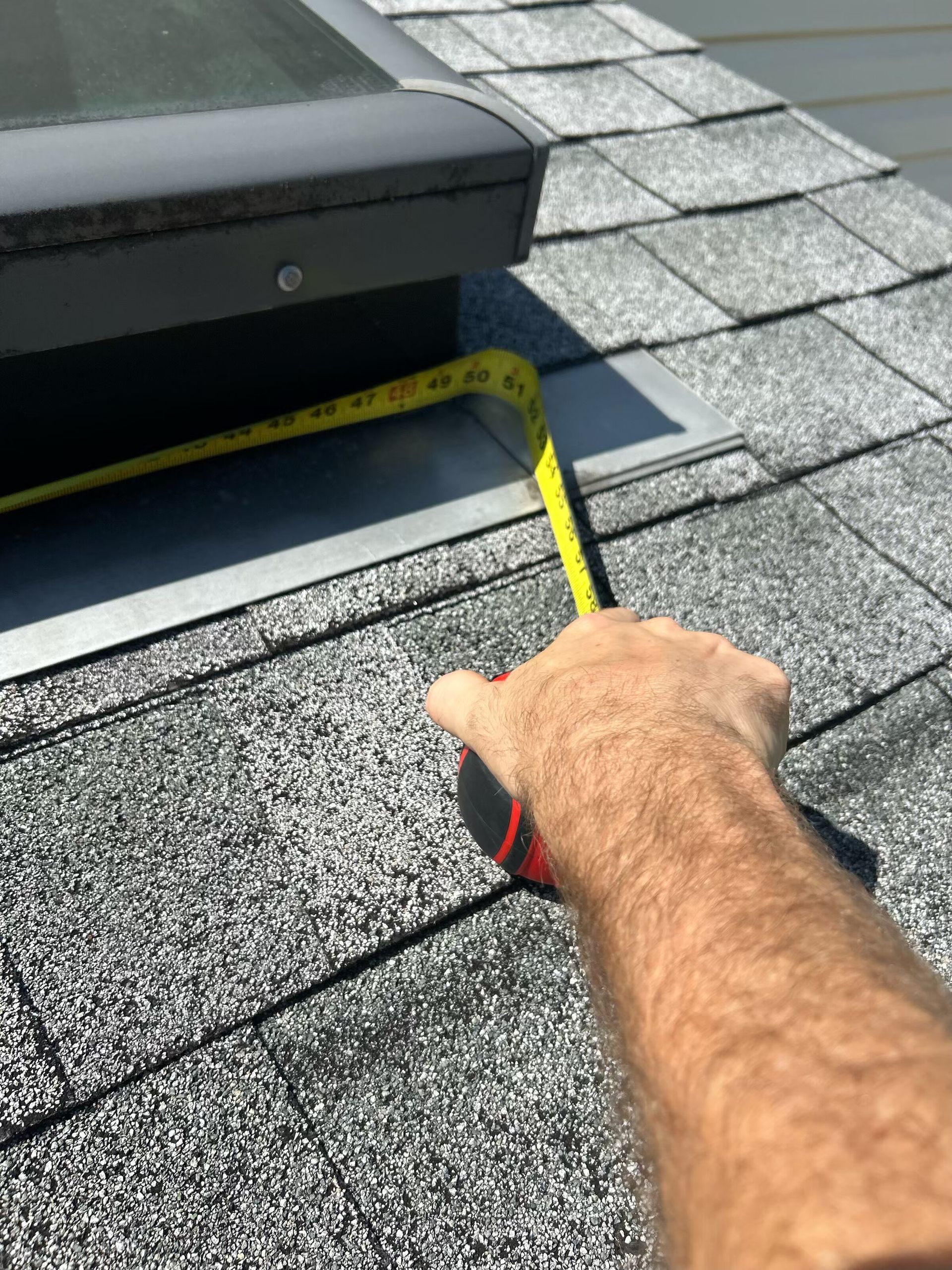
Chimneys, skylights and pipes each need custom flashing.
Salt-air hardware.
Stainless or coastal-rated fasteners add a little.
"Good value. Good workmanship. Good communications. Good cleanup. Good billing. Easy to do business with."
A shingle roof at roughly 20 to 25 years may need replacing twice during one metal roof's 40 to 60 year life. If you plan to stay, the higher upfront price often evens out. If you plan to sell soon, Collins Roofing and Repair will tell you shingles may be the smarter spend. See shingle roofing.
What Flat Roofing Costs
Near You and How Collins Roofing and Repair Helps You Pay for It
Flat roofing cost depends on the system, the size and what's under the old roof. Published 2026 cost guides put most installed flat roof systems at about $4-$14+ per square foot, and a silicone coating over a sound roof at about $2-$4+. Collins Roofing and Repair prices your roof in writing after a free inspection.
Approximate 2026 costs for flat roof repairs, coatings, membrane systems and full replacement
Flat Roof Job (2026)
Approx. Cost
Flat roof repair (seam, blister or flashing)
Averages about $700, quoted after inspection
Silicone roof coating over a sound roof
$2-$4+ per sq ft
Modified bitumen, installed
$4-$8+ per sq ft
TPO, installed
$4-$14+ per sq ft
Rubber membrane (EPDM), installed
$4-$13+ per sq ft
Removing and hauling off the old roof
$1,000-$5,000+ if not included in the price
1,000 sq ft flat roof, replaced
$4,000-$14,000+
What Moves the Price of a Flat Roof
Square footage.
Larger roofs cost less per square foot but more in total.
Tear-off.
Removing old layers costs more than coating a sound roof.
Wet insulation and decking.
Soaked material has to come out and be replaced.
Drainage work.
Tapered insulation, crickets and new drains add to the job.
System choice.
TPO, modified bitumen, EPDM and coatings price differently.
Free roof inspections with photos of everything we find.
Free written estimates with no pressure to sign.
Written workmanship warranty on labor, with manufacturer material warranties on top.
100% satisfaction guarantee: if it isn't right, we make it right.
More Roofing Services
From Collins Roofing and Repair
Metal is one of several roofing systems Collins Roofing and Repair installs and repairs. If metal isn't the right fit, these pick up where it leaves off.
Collins Roofing and Repair prices metal at about $1,000-$1,800+ per square, or about $20,000-$36,000+ for a 2,000 sq ft roof. Screw-down panels cost less than standing seam. You get a written price after a free inspection.
Aluminum is the safer pick near salt water because it doesn't rust, and Galvalume warranties commonly exclude homes close to the surf or marsh. Inland, Galvalume saves money. Collins Roofing and Repair will price both.
Standing seam hides its fasteners under raised seams and lets panels move on clips. Exposed fastener panels screw through the face and need screw checks over time. Collins Roofing and Repair installs both.
A well-installed metal roof lasts 40 to 60 years, with the long end going to aluminum and premium finishes. Collins Roofing and Repair matches the metal to your salt exposure so it reaches that range.
Not when installed over solid decking, underlayment and attic insulation. Collins Roofing and Repair checks your decking and attic at the free inspection so the layers under the metal are right.
No. The Metal Construction Association says metal roofs don't raise your risk of a strike. Metal is also non-combustible. Collins Roofing and Repair hears this question at almost every metal inspection.
Sometimes, but Collins Roofing and Repair usually recommends a tear-off so we can check the decking. We won't cover a roof that already has two layers, soft decking or sagging.
Yes. Collins Roofing and Repair installs standing seam and exposed fastener metal on offices, shops, churches, warehouses and rental properties, and can work around business hours.
How to Reach Collins Roofing and Repair
and Where to Find Us
Collins Roofing and Repair schedules most inspections within a few business days, and active leaks go to the front of the line. Call, book online or stop by.
Call Us
Talk to our office at 843-536-5951. Tell us you're thinking about metal and how close you are to the water, and we'll book the visit.
Your service rep inspects your roof, decking and attic.
You get a written estimate naming the panel system, metal, finish and fasteners.
You decide. No pressure and no sign-today pricing.
Our Metal Roofing Service Areas
Collins Roofing and Repair installs metal roofs from the Grand Strand beaches to the inland towns of Horry, Georgetown and Marion counties. Salt spray along the beaches and the inlet points toward aluminum, while inland homes have more room for Galvalume.
Distances are straight-line estimates; road miles run longer.
Put a Metal Roof on Your Home That Outlasts the Mortgage
With Collins Roofing and Repair
A metal roof is the last roof a lot of homeowners ever buy. Book a free inspection with Collins Roofing and Repair and we'll match the system, the metal, the finish and the fasteners to your house and your distance from the water.